

Inside Universal’s Subterranean Transit Plan
Elon Musk’s The Boring Company won the bid to connect Epic Universe. Now they just have to beat Florida’s water table (and public skepticism).

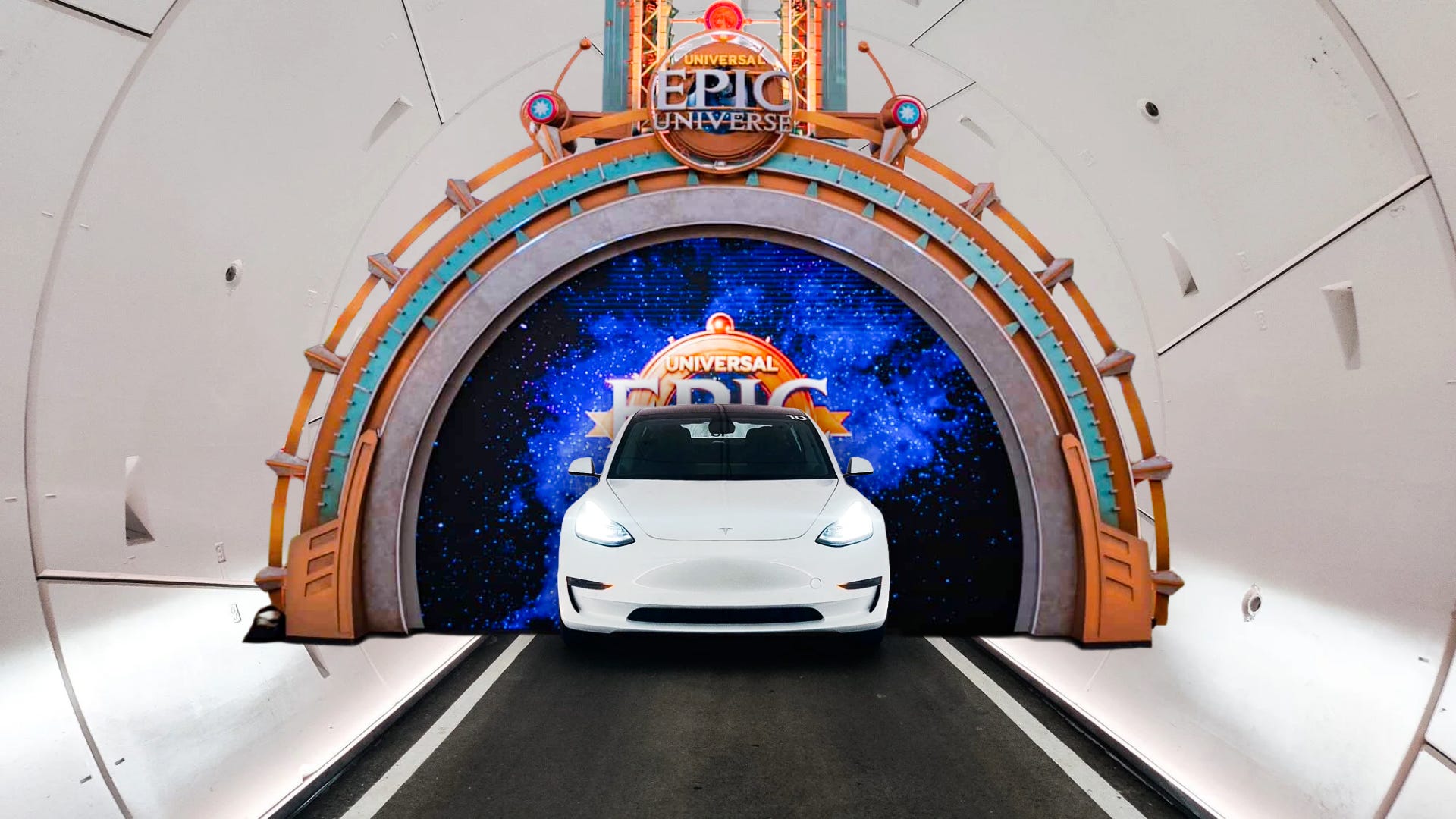
Nobody pays thousands of dollars for a theme park vacation hoping their most thrilling ride of the week will be sitting in gridlock on I-4. Separated from the legacy North Campus (USF, IOA, and CityWalk) by three miles of congested commercial real estate, Epic Universe needs a transportation miracle. Or, at the very least, a really big shovel.
Universal’s famously wordy special taxing district (the Shingle Creek Transit and Utility Community Development District) recently authorized contract negotiations with Elon Musk’s The Boring Company to construct a subterranean transit loop connecting the two campuses. It is a massive, multi-million dollar attempt at reimagining how millions of guests move through Central Florida.
The newly approved negotiations center on a twin-tunnel configuration (two parallel tunnels, each dedicated to single-direction traffic). Operating similarly to the Vegas Loop, the system would utilize a fleet of Tesla vehicles (potentially autonomous or higher-capacity robovans) to shuttle guests underground in a matter of minutes, completely bypassing the gridlock of I-4 and Sand Lake Road.
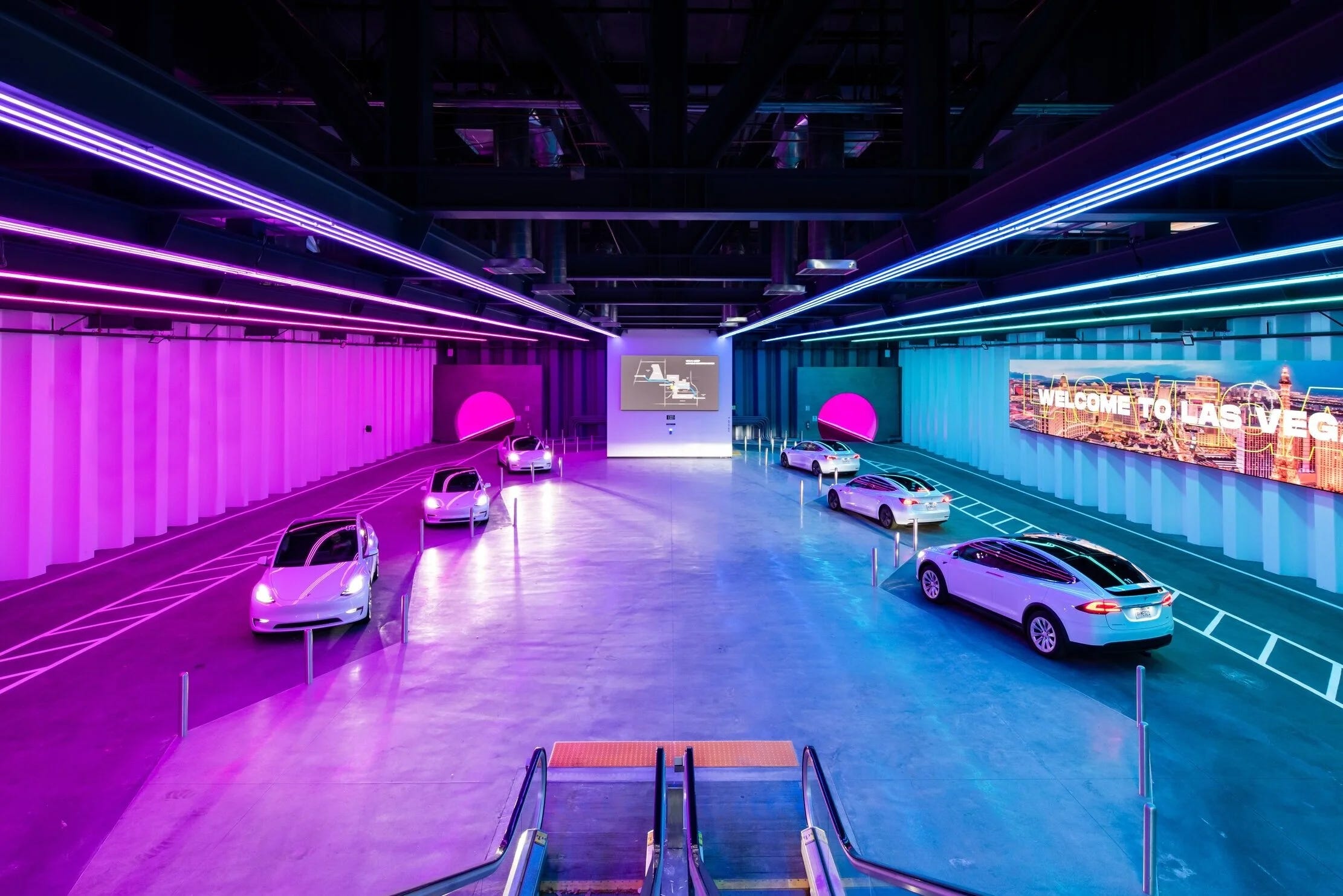
But how will it handle peak park-to-park traffic? For context, let’s look at Universal’s current premier park-to-park connector: the Hogwarts Express. With two trains running simultaneously and relatively quick loading times, it boasts an estimated hourly capacity of roughly 2,400 passengers per hour (approximately 1,200 per direction). By comparison, The Boring Company’s operational Vegas Loop has demonstrated a peak capacity of around 4,400 to 4,500 passengers per hour.
During peak morning park openings or post-fireworks mass exoduses (especially for the rumored Universal Celestial Goodnight show coming soon), that capacity is going to be essential. A tunnel system also ideally allows for dynamic fleet management. If a massive crowd exits Epic Universe at 10:00 PM, Universal can theoretically flood the South Campus station with empty Teslas to swallow the crowds (a flexibility that traditional rail lacks).
When the district put out the RFQ (Request for Qualifications) for an “innovative point-to-point” system, The Boring Company was not the only bidder, but Universal passed on two distinct alternatives.
The Sunshine Connection Partners pitched a traditional, high-capacity automated people mover, similar to the trams at Orlando International Airport. While reliable, traditional rail requires massive footprints for tracks and stations. In a densely populated zone where surface land is premium revenue-generating real estate, a traditional rail line was probably deemed too disruptive and land-intensive by Universal.
Glydways proposed a system of smaller, autonomous electric vehicles running on dedicated, elevated guideways. This completely avoids Florida’s complex groundwater issues, which is usually a plus when you’re building in a swamp. However, building elevated tracks requires securing complex air rights and rights-of-way across I-4. The district noted that elevated construction would be significantly slower and highly disruptive to existing surface traffic during the build phase. Tunnels won because they bypass surface negotiations entirely. The Boring Company promised an aggressive timeline (roughly 1.5 years of construction once permits are secured) deploying multiple tunnel boring/drilling machines simultaneously without shutting down I-Drive. While the Boring Company loop could potentially solve the micro-problem of campus-to-campus transit, Universal’s overall macro-strategy is where the most interesting disruption is happening.
To bring guests to the resort from MCO, Universal has heavily subsidized the Sunshine Corridor, a proposed shared rail line accommodating both the local commuter train, SunRail, and the private intercity high-speed train, Brightline. Universal donated 13 acres of prime real estate for the Orange County Convention Center station and guaranteed $13 million in annual ticket sales to underwrite operating costs. This is a departure from Disney’s (proven successful) walled garden approach. Disney really relies on closed-loop, privately owned transit, including the Monorail, the Disney Skyliner, and their massive bus fleet. Disney’s model guarantees absolute control over the guest experience, the branding, and the high show quality, but it intentionally isolates the resort from the broader city infrastructure.
Universal is perhaps sacrificing micro-level control for macro-level infrastructure. By funding public and regional transit, Universal can’t control if a SunRail car’s AC is broken or if a Brightline train is delayed. However, they successfully connect MCO directly to their front door while simultaneously connecting local Orlando residents to the 125,000-plus jobs in the tourist corridor.
Massive skepticism remains regarding the Boring Company tunnels negotiations. Obviously a first main point of contention is geography. Central Florida is essentially swampland sitting on porous limestone with a notoriously high water table. Digging tunnels here is an immense, incredibly expensive engineering challenge highly susceptible to flooding and sinkholes (sounds absolutely perfect). Secondly, we’re familiar with the track record of the potential new partner. While the Vegas Loop is technically by all means operational, The Boring Company has a history of overpromising and underdelivering. In 2021, the company pitched a similar high-profile tunnel system in Fort Lauderdale, Florida, designed to connect the downtown area to the beach. Despite initial excitement and city approvals, the project essentially fizzled out into a stalled, inactive state. Similar grand proposals in Chicago, Los Angeles, and Washington D.C. have also been quietly abandoned or canceled over the years. Maybe the novelty of underground tunnels is only really viable in highly tourist-centric bubbles like Orlando & Vegas.
Furthermore, the Vegas Loop has faced criticism for essentially being Teslas in a tunnel driven by human chauffeurs, occasionally even suffering from the very underground traffic jams it was built to solve.
The contract negotiations are just the first step. Whether Universal can wrangle the geological nightmare of Florida’s bedrock and keep a notoriously volatile tech company on schedule remains the multi-million dollar question. If they succeed, it could potentially be one of the most advanced transit networks in theme park history. If they fail, Epic Universe guests might be waiting for a very long bus ride.
Subscribe to stay up-to-date with all things Epic Universe & theme parks.